
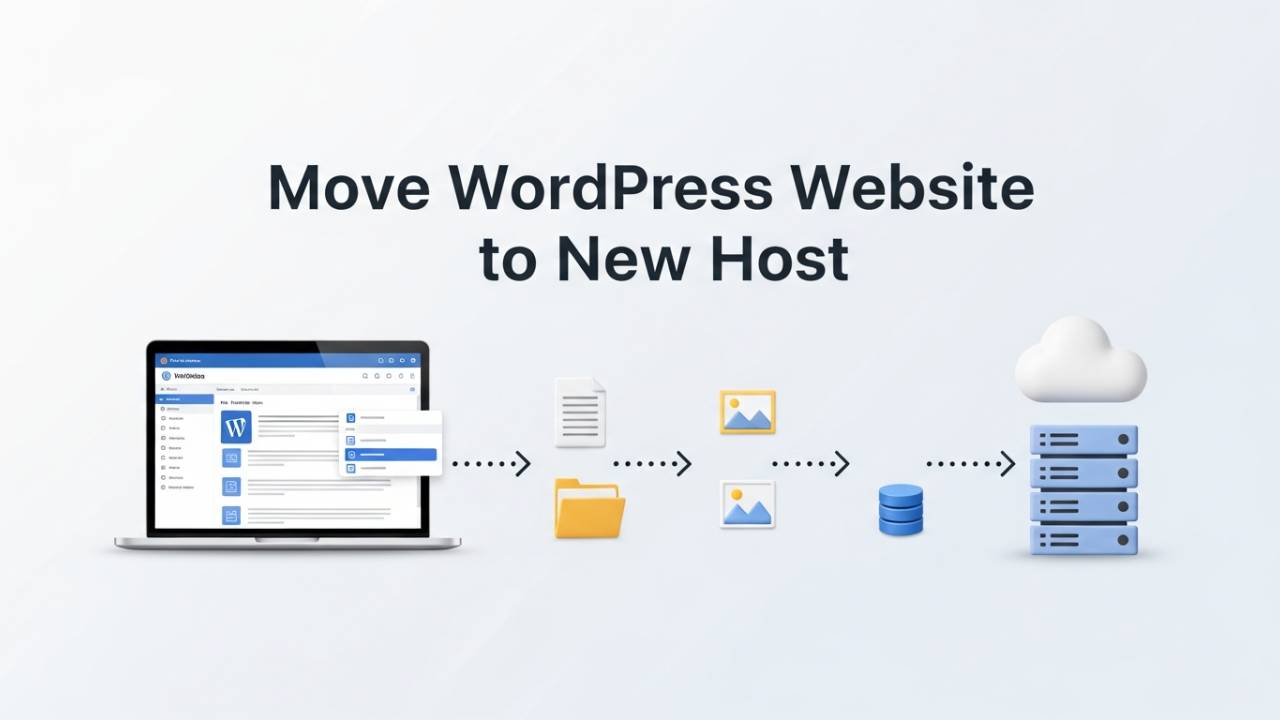
Moving WordPress to another host means taking your whole website – the words, pictures, and settings – and placing them on a new server where people can still see your site on the internet. Think of it like changing houses: your house (the website) stays the same, but its address (the host) changes. Many people decide to move their WordPress site to a new host to get faster loading, better support, or lower costs. In this guide, you will learn how to move your WordPress site safely without losing anything important.
Why You Might Want to Move WordPress to a New Host
Sometimes your website outgrows its current host. Maybe it feels slow, or you want more space. Or perhaps the support from your hosting company isn’t helpful. When you move WordPress to another host, you are simply changing where your site lives online, just like moving a home to a better neighborhood. You keep all your content exactly as it was before, but the new host might make your site run smoother and faster.
What Happens When You Move WordPress
Before we start, it helps to know what parts make up a WordPress site. There are two main pieces: the files and the database. The files include your images, themes, and plugins. The database holds all your posts, pages, comments, and settings. When you move WordPress to another host, you need to take both of these with you so your site looks and works just like before.
Preparing to Move – What You Should Do First
Before touching anything, it’s important to make a complete backup of your WordPress site. This means saving a copy of all your site’s files and its database in a safe place on your computer. If something goes wrong while moving, this backup lets you restart without losing your work.
Once your backup is done, update WordPress and all your plugins. This makes the site healthier and less likely to break during the move. You should also make a note of your current DNS settings — these are like instructions that help your web address find the right host.
Ways to Move Your WordPress Site to a New Host
There are a few simple ways to move WordPress. Here are the most common ones:
1. Use a Migration Plugin
A migration plugin is like a helper tool that moves your files and database automatically. Plugins such as Migrate Guru, Duplicator, or All-in-One WP Migration can make the process much easier. They bundle everything into a package that you can then upload on the new host. Some plugins can even move large sites without you doing much work.
The good part about using a plugin is that it does most of the heavy lifting for you. The tricky part can be size limits – some free versions only work up to a certain file size. But for many sites, plugins are the easiest way to move.
Step-by-Step: Manual Way to Move Your WordPress
If you want to understand more about how WordPress works or your site is too big for a free plugin, you can move your site manually. This means you do each step yourself. Here’s an easy breakdown:
-
Download Your Site Files: Use a tool like FileZilla to connect to your server and download all WordPress files to your computer. You will save your themes, plugins, images, and everything in the site folder.
-
Export Your Database: The database stores your posts and all settings. You export it using a tool like phpMyAdmin so that it becomes a file you can import later.
-
Upload to the New Host: Once you have your files and database, connect to the new host and upload everything into the correct folder so the site will open there.
-
Create a Database on the New Host: You need a place for your database on the new host. After creating it, remember the name and password because you will use them in the next step.
-
Update wp-config.php: This file tells WordPress how to connect to the database. You open it and replace the old database name, user, and password with the new ones.
By doing these steps, you put all your website content onto the new host in the right place.
What Happens Next?
Once you have moved your files and database, you still need to tell the internet that your site now lives at the new host. That part – changing DNS settings — will be covered in the second half of the article, along with important tips to keep your site working well and looking the same after the move.
Manual Migration: Doing It by Yourself
If you want to see exactly how each piece of your WordPress site moves – and you don’t mind doing a few more steps – you can move your site manually. Think of this as packing each item from your old house and placing it in the new house yourself.
First, you need to download all your site files from your old host. These files include your pictures, themes, plugins, and everything else that makes your site look and work the way it does. Usually, you can do this with a tool like FTP (a way to copy files from one server to another) or through your hosting control panel.
Next, you also need a copy of your WordPress database – this is where all your posts, pages, comments, and settings are stored. You can get this database file from a tool called phpMyAdmin inside your hosting account. Once you have both the files and the database, upload them to your new host and place them in the right folders, just like a puzzle. Finally, update the tiny text inside a file called wp-config.php so your website knows the new database location.
Taking the manual route gives you more control, but it takes patience and careful steps so nothing gets lost in the move.
How to Reduce Downtime During Your Move
Downtime means your site might disappear for visitors during the move. Nobody wants that, especially if your blog or business is important to your readers. Luckily, there are simple ways to make sure your website stays online while it moves.
One good trick is to prepare everything before you switch directions. That means upload your site to the new host, check every page, and make sure everything looks right – before you point your domain to the new place. If your host gives you a temporary address or staging site, use that to check your site first.
Also, choose a time when fewer people visit your site — like late at night or early morning — to make the final switch. When you finally update the address (DNS) so the world sees your new site, some people might still see the old site for a short time. This is normal and happens because it takes computers a bit of time to update the change everywhere.
After the Move: What to Check First
Once your website is on the new host, it’s important to check that everything works like before. Open your homepage, click through a few posts, and check if pictures show up correctly. You should also log into your dashboard and make sure plugins, menus, and forms are all doing their jobs.
If something feels broken, it might be because a link wasn’t moved properly or a setting didn’t update. This is a good time to fix those little issues before your visitors notice them. Sometimes, clearing your browser cache or refreshing the page can also help if things look strange at first.
Helping Your SEO Stay Safe After Moving
SEO stands for search engine optimization, which is a big name for how search engines like Google find and rank your site. When you move your WordPress website to a new host, you want Google to keep loving your site just as much as before.
A very important step is to tell search engines that your site has moved. If your domain (your website address) stays the same, this part is easier. Just make sure the site loads fast, every page opens, and you submit your sitemap again in your Google Search Console. If your site address changes, you might even use a special tool called Change of Address in Search Console so Google understands the new location quickly.
Another helpful move is to set up 301 redirects if you changed any page addresses. A 301 redirect tells browsers and search engines that an old page has moved to a new place forever. This keeps people from landing on broken pages and helps your rankings stay steady.
Common Troubles After Migration
Even when you do everything carefully, sometimes things don’t work right. Some common problems include pages that don’t load, missing pictures, or plugin features that act odd. These usually happen because something didn’t copy over exactly right, or a setting didn’t match the new host’s preferences.
If that happens, don’t worry. Go back into your dashboard and check the URLs, make sure the media files are all there, and confirm that your plugins and theme are active and up-to-date. Sometimes simply updating them solves the issues.
When to Close Your Old Hosting
Once everything is working smoothly on the new host and your domain is pointing correctly, you can think about closing your old hosting account. But don’t rush! It’s a good idea to keep the old hosting active for a couple of days just in case something unexpected shows up. This extra time acts like a safety net so you can fix any surprises without stress.
Conclusion
Moving your WordPress website to a new host might sound like a big task, but with careful steps and simple checks, you can do it without losing pages, visitors, or search rankings. Start with a solid backup, choose the method that feels right for you – plugin or manual – and take your time testing everything before and after the switch. Once you’ve done that, your site will feel right at home in its new host!
Frequently Asked Questions (FAQ)
1. Does moving a WordPress website to a new host affect SEO?
No, moving your WordPress website to a new host does not harm SEO if it is done the right way. Make sure all pages load properly, links work, and your site is accessible to search engines after the move.
2. Can I move my WordPress website without downtime?
Yes, you can move your WordPress website without downtime. Set up the site fully on the new host first, test everything, and only then update your domain settings. This keeps your site visible during the move.
3. Which is better: plugin migration or manual migration?
Plugin migration is best for beginners because it is simple and fast. Manual migration gives more control but needs careful steps. Choose the method that feels comfortable for you.
4. Will my images and posts be safe after migration?
Yes, your images and posts will stay safe if you create a full backup before moving the site. Always check your pages and media library after the migration is complete.
5. Do I need to change my domain name when moving hosts?
No, you do not need to change your domain name when moving to a new host. Most people keep the same domain and only change where the site is hosted.
6. How long does it take to move a WordPress website to a new host?
In most cases, it takes a few hours. Small websites may move faster, while larger sites can take longer depending on the method used.
7. What should I check first after moving my WordPress site?
After migration, check your homepage, posts, images, contact forms, and menus. Also log into the dashboard to make sure plugins and themes are working correctly.